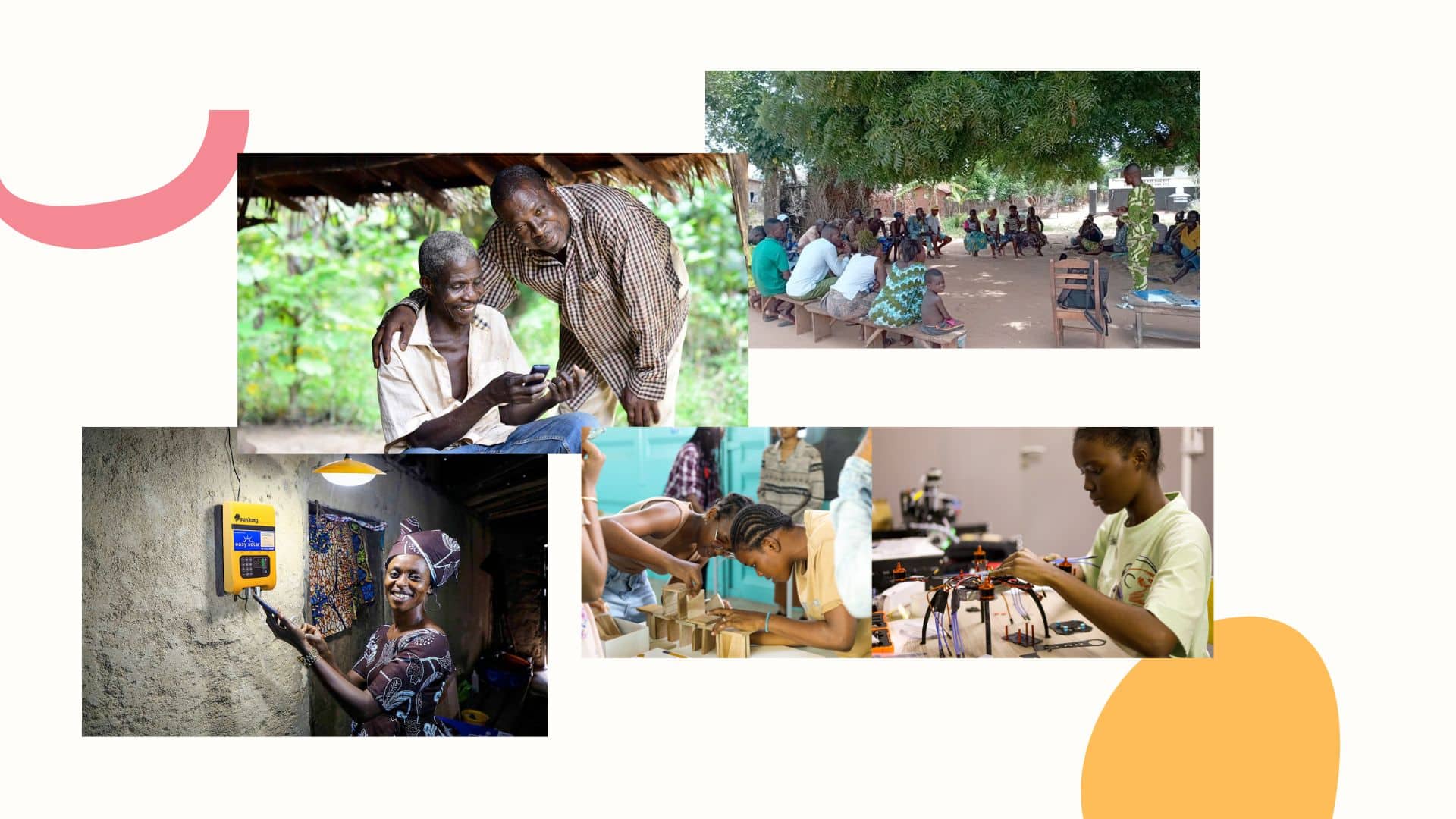
Over the past few decades, billions of dollars have poured into development projects across Africa, in education, health, agriculture, technology, and local governance. Yet many of these initiatives produce results that fade quickly, or struggle to survive once external support ends.
That's not necessarily because the projects are badly designed or under-resourced. It often points to something else: a gap between the solutions on offer and the realities local actors actually live with. In many cases, projects are shaped by institutional, methodological, or financial logic drawn up far from the ground they're meant to serve. Beneficiaries get pulled in late, usually at the implementation stage, rather than when problems are being defined or solutions designed.
This is why local ownership has become such a central question in debates about aid effectiveness and the sustainability of development work. The idea sounds simple. Putting it into practice is anything but.
A project only produces lasting impact when local actors understand it, accept it, adapt it, and take it as their own.
In other words, it isn't enough to hand a community a finished solution. People need to recognize themselves in the project, and have the means to keep shaping it over time.
That's part of why participatory and human-centered approaches are drawing growing interest in international development. Design thinking is one of them, built around:
- identifying what users actually need
- co-creating solutions with them
- testing innovations progressively, through iteration
It's a method best known in innovation and entrepreneurship circles. But it's increasingly being applied to how development projects themselves get designed and delivered.
That question shaped my own research for a Master's degree in international project management and evaluation at Université Senghor d'Alexandrie. Using the AR Classroom project in Benin as a case study, I looked at how design thinking could help strengthen local ownership of a development initiative. The findings, along with other field observations and the wider literature on aid effectiveness, point to one central idea:
A project's durability has less to do with how sophisticated its solutions are, and more to do with how those solutions are built alongside the people who will live with them.
What local ownership actually means
In international development, "local ownership" gets used constantly: in strategy documents, project papers, evaluation frameworks. It's been one of the core principles of aid effectiveness since the early 2000s. And yet the concept stays somewhat vague, often reduced to beneficiary participation or simple buy-in.
Real local ownership is a different dynamic. It means the people affected by a project (public institutions, local organizations, field practitioners, or beneficiary communities) actively take part in:
- defining the problem
- designing the response
- adapting the solution as it evolves
Seen this way, local populations stop being just beneficiaries or end users. They become stakeholders who help build the project itself.
In practice, though, participation in most development programs kicks in at the implementation stage. Communities are informed, consulted, or mobilized to carry out activities that were already decided. That can help a project spread, but it doesn't guarantee ownership. When a project is designed upstream, with little real interaction with local realities, it risks missing what the ground actually needs, or becoming impossible to sustain once outside support is withdrawn.
Genuine local ownership requires flipping that logic. It means recognizing that local actors hold valuable knowledge about their own environment, constraints, and priorities. A project with real ownership tends to show a few telling signs:
- local actors understand the project's goals and see them as relevant to their context
- they take part in the decisions that shape activities, and can adapt solutions to fit the ground
- they have the technical, organizational, or institutional capacity to carry the work forward once the initial support ends
Local ownership, understood this way, isn't just a value international cooperation likes to state. It's a condition for whether a project actually lasts.
The technical and institutional constraints we underestimate
Development projects usually introduce new practices, technologies, or ways of working. These innovations can bring real improvement, but whether they take root depends heavily on context.
In some settings, the available infrastructure, material resources, or local technical skills simply don't support using the proposed tools at full capacity. Local institutions can also run into organizational or administrative constraints that make it hard to fold new practices into how they already operate day to day.
The AR Classroom project in Benin, which I studied for my Master's thesis, makes this concrete. Workshops and interviews with teachers and learners surfaced recurring issues: limited internet access, scarce digital equipment, and varying familiarity with the pedagogical technology itself. Left unaddressed at the design stage, these factors can quietly determine whether local actors are even able to take ownership of an innovation.
When funding logic rewards speed over depth
How projects get funded also shapes how much ownership they generate. Development programs typically run on tight timelines, measurable targets, and short-to-medium-term deliverables.
Those constraints make sense: donors have to account for how resources are used. But they can also squeeze out the time needed for listening, experimenting, and adapting a project gradually.
Real local ownership needs iterative processes:
- ongoing dialogue with people on the ground
- testing solutions at a small scale first
- adjusting the approach based on what actually happens
When projects are designed and rolled out on compressed timelines, these steps are often the first to go, and local buy-in suffers as a result.
How Design Thinking strengthens local ownership
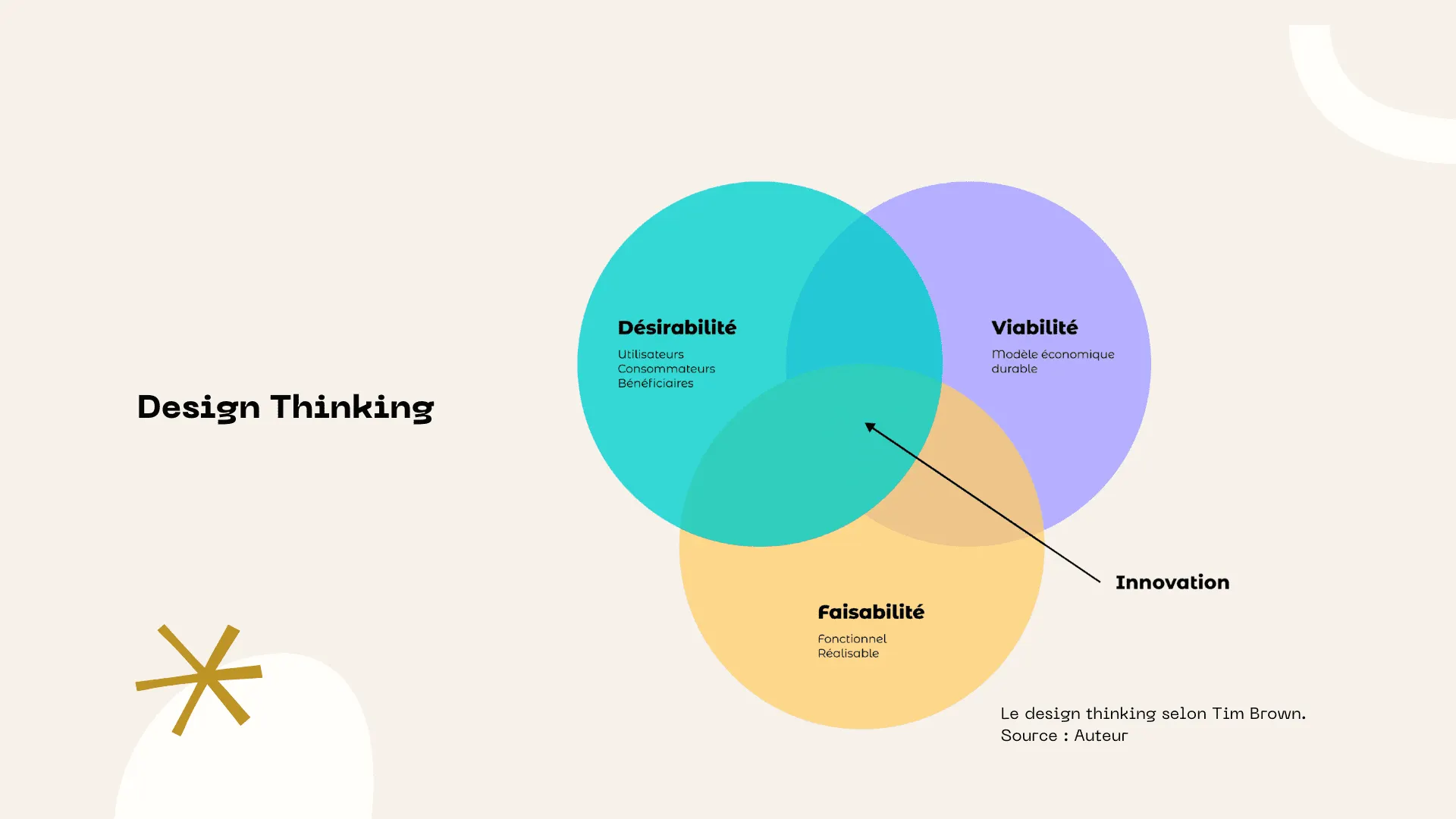
Given these limitations, co-creation methods like design thinking are getting more attention as a way to design and deliver development interventions differently.
Design thinking started in the worlds of product design and entrepreneurship, and has since spread into social innovation and public policy. Its core premise is straightforward:
The best solutions emerge when the people who will actually use them are fully part of the design process.
Applied to international development, this flips the usual approach. Instead of starting from a pre-built technical solution or template, design thinking starts by exploring what people actually need, understanding how they work, and building the response together with them.
Understand the need before designing the solution
Design thinking begins with what's often called the empathy phase: genuinely understanding the context and the people in it, through:
- field observation
- interviews
- participatory workshops
- immersion in the environment where the solution will actually be used
In development work, this phase moves past purely institutional diagnostics and toward the lived reality of local actors. It surfaces needs, organizational constraints, or everyday practices that don't always show up in a preliminary analysis.
Feeding these insights into the design stage from the start pushes projects toward solutions that are realistic and genuinely fit local conditions.
Co-design solutions with the people on the ground
Co-creation is another defining feature of design thinking. End users, local institutions, and project partners are invited to actively generate ideas and shape solutions, not just react to them.
This shifts the traditional relationship between designers and beneficiaries. Local actors stop being people who simply validate decisions made elsewhere. They help imagine and build the response to the problem directly.
In development projects, this brings local knowledge into the process and gives the resulting solutions more legitimacy. It also opens up a genuine space for dialogue, one that aligns expectations between partners and surfaces potential roadblocks early.
Test and adjust, rather than plan and deliver
Unlike linear planning approaches, design thinking pushes for fast experimentation through prototypes: mockups, simplified demos, simulations, or pilot versions of a tool or service.
The goal isn't to deliver a finished solution on the first try. It's to test assumptions and gather real feedback from users, then improve the solution step by step based on what's learned.
For development projects, this has clear payoffs. It catches necessary adjustments before a larger rollout and limits the risk tied to introducing new practices or technologies. It also deepens local involvement, turning people into active participants in improving the project rather than passive recipients of it.
Build buy-In through experience, not just delivery
Design thinking also changes how people discover and adopt a solution in the first place. Instead of receiving a finished tool or method, users take part directly in shaping how it evolves.
That involvement builds a clearer understanding of the project's goals and how it works. It also creates a sense of contribution that can sustain engagement well beyond the initial rollout.
Seen this way, the innovation isn't just the technology or the tool. It's the process of building the solution collectively, with the people who'll actually use it.
A case in point: AR Classroom, with the NGO GUERRA
These principles (listening to local actors, co-building solutions, testing progressively) take on real weight when you see them applied in the field. That's exactly what I set out to examine in my Master's thesis on using design thinking to strengthen local ownership of a development project.
The case study was AR Classroom, an initiative to develop augmented reality learning content to support education and health training in Benin. The goal was to make certain scientific concepts easier to grasp through interactive digital tools, capable of visualizing phenomena or structures that are hard to represent in traditional teaching materials.
Beyond the technology itself, the project offered a useful lens for examining how local actors (teachers, learners, and training institutions) could be involved in designing and adapting the proposed solutions.
Gathering data on what users actually needed
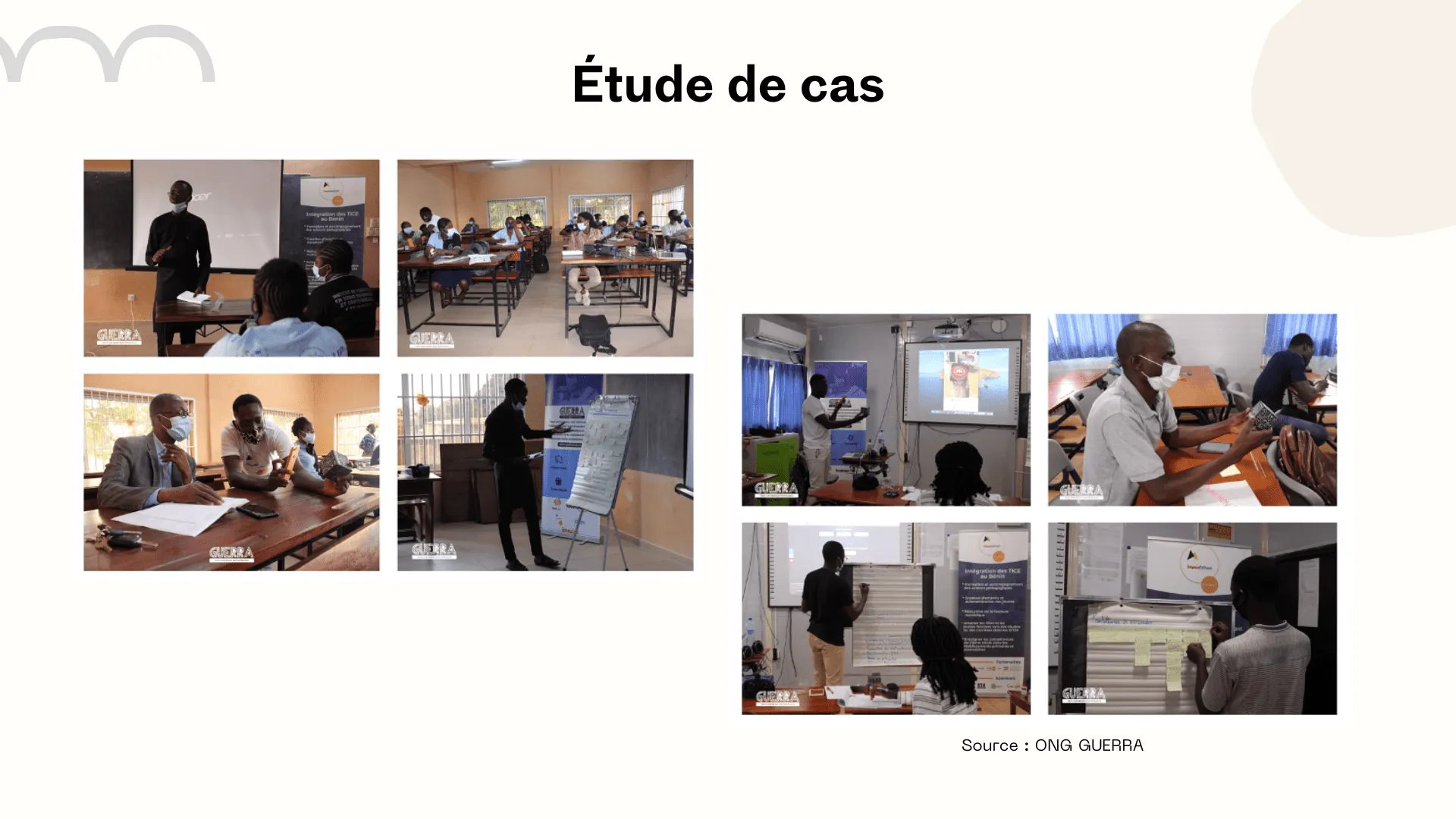
The first phase explored existing teaching practices and the challenges faced by potential users of the tool. Workshops and interviews were held with teachers and learners, including at training institutions in Parakou.
These conversations surfaced concrete challenges in teaching certain scientific subjects. In life and earth sciences, and in health professional training, some concepts depend on visualizing complex biological structures or processes that are hard to represent statically. Existing teaching materials didn't always make these phenomena clear, which complicated learners' understanding.
Discussions with people on the ground also revealed practical constraints that mattered a lot:
- limited internet access
- uneven availability of digital equipment
- varying levels of teacher familiarity with certain tools
These findings shaped the project's direction, surfacing real needs and usage conditions that had to be built into the design from the outset.
Co-building solutions with people on the ground
In keeping with the design thinking approach, the next phase brought local stakeholders into the conversation about possible solutions. Workshops explored different avenues for pedagogical innovation and identified which features would matter most to users.
This collaborative process generated several ideas for augmented reality applications and learning content. The aim wasn't just to deliver an innovative piece of technology. It was to design resources that would genuinely help teachers and learners in their day-to-day work.
Involving users directly at this stage also clarified expectations and surfaced adjustments needed to fit the tools to conditions on the ground. Discussions, for instance, made clear how important it was to build tools that were simple to use and could function in environments with limited technological resources.
Testing and refining the solutions
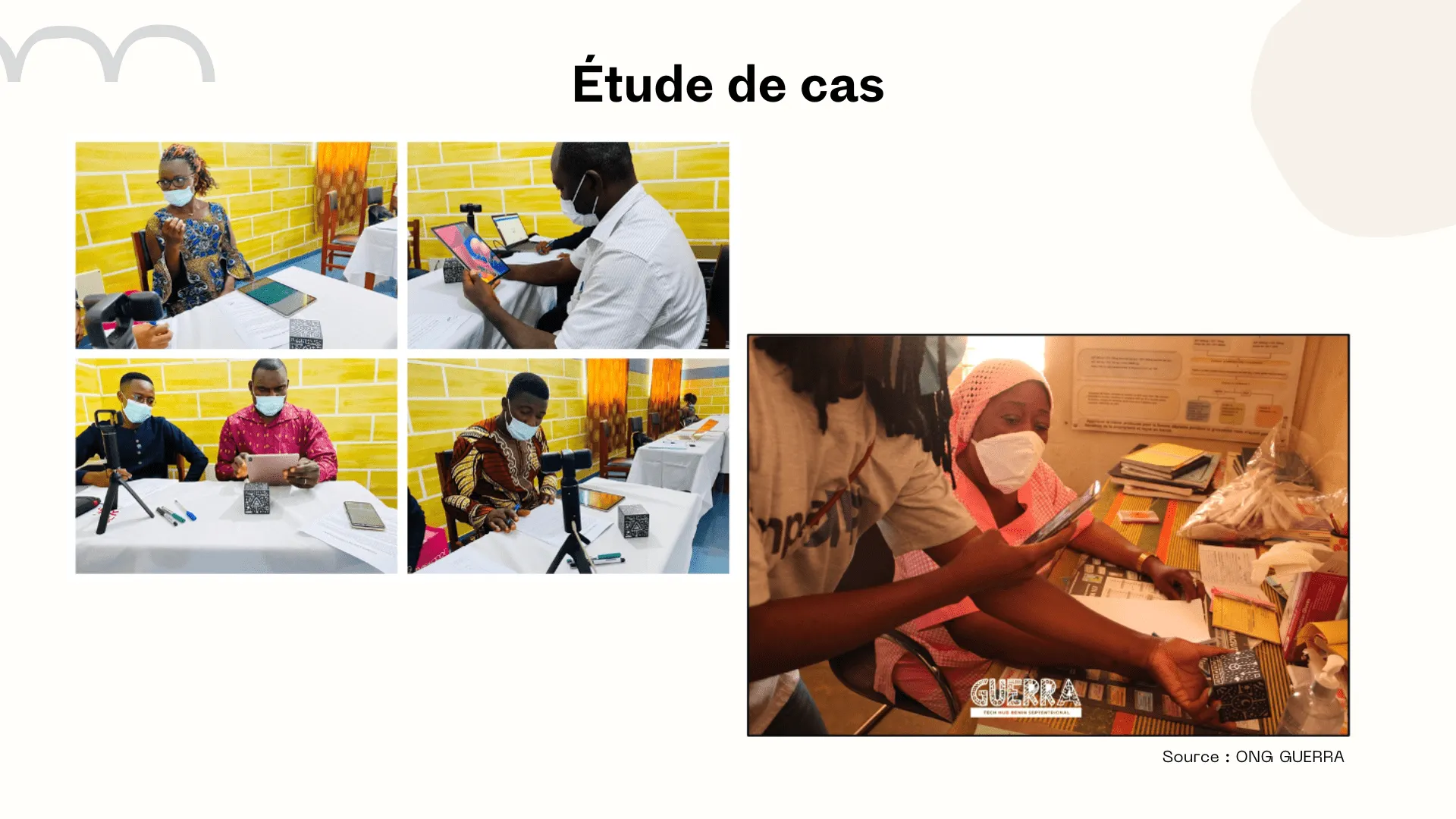
Experimentation played a central role in the project's approach. Rather than build a complete solution upfront, some ideas were tested as prototypes or demos to gather real user reactions.
This experimentation phase made it possible to observe how teachers and learners actually interacted with the tools. The feedback gathered helped identify necessary improvements: whether in the app's usability, the clarity of the content, or how it fit into existing teaching activities.
Beyond the technical fixes, this phase also played a real role in building local ownership over time. By taking part in testing and in discussions around the prototypes, users came to understand the project's goals better, and could picture themselves actually using the tools.
What this means for development projects more broadly
The AR Classroom experience offers lessons that go well beyond educational innovation or augmented reality specifically.
First, it shows that introducing a technological innovation is not, on its own, enough to guarantee a project takes hold. Success depends largely on how the solutions are built with users, and how well they fit local realities.
Second, it underscores the value of investing time in listening and co-building. Conversations with local actors surfaced constraints and needs that a more conventional design process likely would have missed.
Finally, the project illustrates what user-centered methods like design thinking can contribute: projects that are genuinely rooted in local realities. By encouraging experimentation, dialogue, and collective learning, these approaches help build the conditions for lasting ownership of the solutions they produce.
If you'd like to dig deeper into this research, including the full methodology and detailed findings, you can read the complete thesis here.
This article was originally published on my Medium space in French. Read the original.